What is a bilingual speech and language assessment? Children who speak a language other than English and children who are bilingual need to be evaluated in their native language or the languages that they speak. When children are evaluated only in one of the languages, or in the language in which they are least proficient, such as English for...
Equity Matters: In Learning, for Life.
Equity Alliance Blog

A father drops his child off at school. He lingers to watch as he crosses the playing field and enters a bungalow classroom at the back of the school ground. “Each step,” he confides, “is an ache in my heart. With each step my child is announcing to all who care to notice, ‘I’m special ed. I’m special ed.’”
...

When I was growing up, I ended up bedridden for a period of time. After endless days of watching cartoons, I was bored. Thankfully, a friend’s mother brought over a box of books which had been sitting in the attic which she had just cleaned out. I picked it up, and for the first time...

When asked to blog I initially thought I would talk about teacher education for inclusion which is one of my specific areas of interest. We have been actively promoting inclusion and ‘education for all’ for nearly four decades now but has teacher education for inclusion really kept up with this change? Can we claim as teacher educators that we...

When I think back to the years when my sister and I were children, I remember a time when I could still fully relate to her. In her youth, she was a lot like me: a very shy and sensitive child who was acutely in tune with the emotions of others. We both experienced complex feelings but lacked the words to express ourselves. We empathized on...

When I was a young girl living in the North East of England, our main form of transport out of the small town was a public bus. My family and I would sit in the bus shelter waiting for the bus to arrive with a sense of positive anticipation of the trip we were going to take. However, on occasion we would wait and the bus would not arrive at the...

The topic of my blog is the role of school leaders in enhancing inclusion of children who display disruptive behaviours. I want to share a true case study that has led me to raise some questions in the hope of initiating substantive, honest dialogue about what it means when we call a school “inclusive.”

Ever walk into a classroom during a walkthrough or walk-by and immediately felt compelled to sit down? A masterful teacher has just engaged you! You already know the content; you can even guess what sub-objectives are about to be laid out in front of you – but because of the strategies being demonstrated– you must participate. This is...

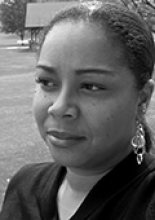
In my university sociocultural foundations course I ask students—many of whom plan on becoming K-12 teachers—to list words they have heard used to talk about Black students. Every semester I consistently hear terms like: loud, lazy, gangster, troublemaker and at-risk and each time I am floored by the words shared. Neither these terms nor their...
Whose child is this?
As I walked down the hall of the bustling middle school with young people scurrying through the halls dashing from room to room to get to their next class, I heard a female adult voice rise above the din call out, “Whose child is this?” Puzzled, I turned toward the voice to see an adult standing next to a thin,...

As a principal of an elementary school with steadily increasing numbers of economically disadvantaged students, I have seen a shift in focus on academic as well as systemic strategies in our approach to student success.Randy Bomer’s discussion of deficit perspective is well-taken as political issues surrounding school performance have...
Principals are more likely to keep their faculty focused on student learning if they can shift the everyday conversation in their schools away from assessment as testing students and towards talking about assessment as testing instructional decisions. It is very hard to change our historical uses of “student testing,” but principals have the...

A fundamental debate erupts whenever U.S. educators discuss “achievement gaps.” Do educators’ everyday actions really contribute that much to racial disparities? Or are such disparities caused by parents, by peers, by “society,” by “poverty,” by children themselves?
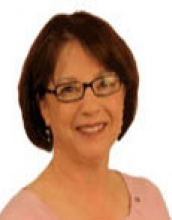
In this space, over the past several months, educators have discussed how we must attend to the needs of English language learners and to the professional development models we are using to build capacity among teachers for working with ELL students. I would like to build on the ideas and knowledge of previous contributors by discussing...
One of the greatest strengths ELL students bring to the classroom is their primary language (L1). Richard Ruiz (1984) reminds us that effective programs for ELLs view the primary language as a resource, rather than as a problem to be overcome. Even in non-bilingual classrooms teachers can utilize their students’ L1 in a manner which will make...
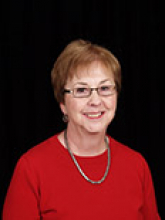
During the last forty years, our understanding about how all children learn has grown enormously. Research has yielded new insights into how children and adolescents learn and what instructional approaches work best in particular contexts. At the same time, the learning demands for our entire country are higher than they have ever been. As...
Students with disabilities have a right to a high quality education, an education that goes beyond a focus on skills and instead sets its sights on loftier goals (promoting equity), more ethical dispositions (e.g., a concern for fairness), and more elusive but critical habits of mind (e.g., engaging with inquiry). All students deserve such an...
- ‹ previous
- 9 of 10
- next ›